Titanium implant machining engineered for the world's most advanced medical devices.
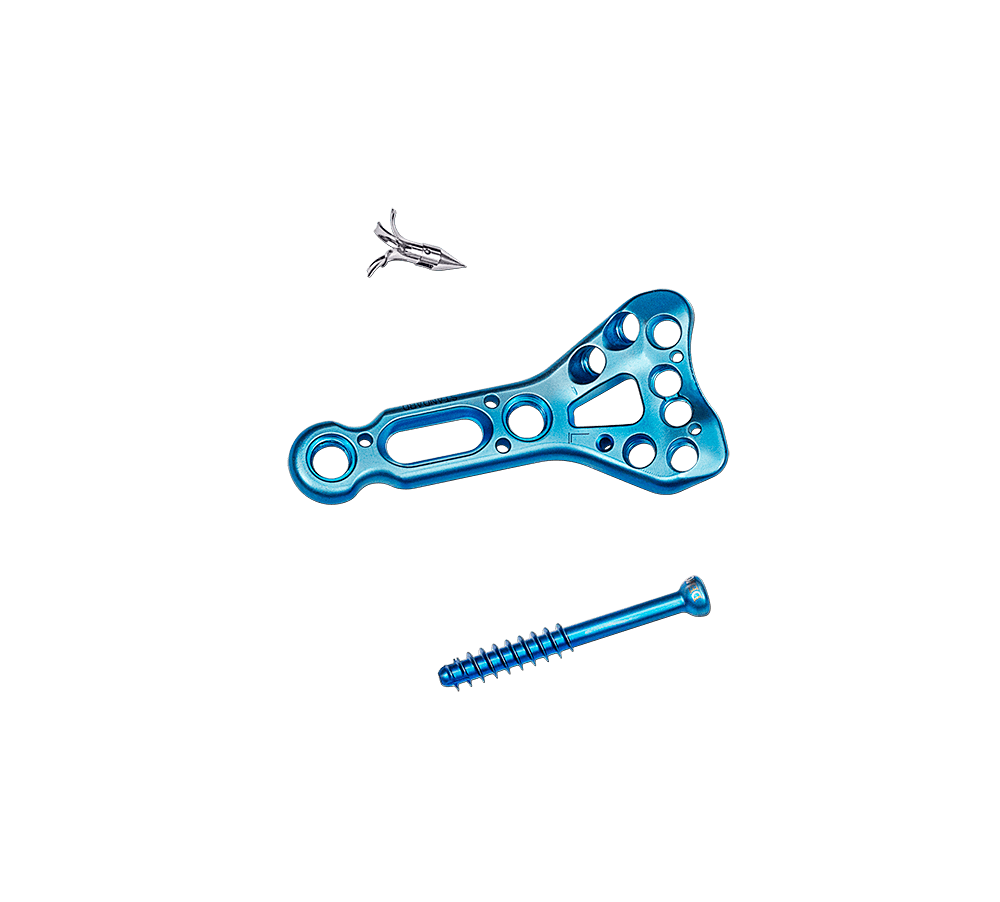
OEMs rely on Norman Noble when titanium is part of an advanced implant. Our team knows how to engineer stable, repeatable processes that protect titanium’s integrity while producing tight-tolerance features.
Our process engineers design complete manufacturing workflows around your device: optimized toolpaths, controlled heat input, stable fixturing, predictable finishing, and validated inspection. The result: titanium implant machining that delivers accuracy, consistency, and cost-efficient scale.
Titanium demands precise control during every stage of manufacturing. Norman Noble’s vertically integrated capabilities support production of highly engineered implant geometries:
5-axis machining for multi-surface features, undercuts, and rigid one-setup strategies.
Swiss machining and precision turning for stems, shafts, anchors, screws, and small cylindrical components.
Micro-machining and micro-EDM for extremely small features in thin or fragile sections.
Laser processing for precision cuts, feature refinement, and UDI/marking.
Electropolishing and passivation for smooth, clean, and corrosion-resistant surfaces.
Automated cleaning and validated finishing sequences engineered specifically for implantable titanium.
Titanium’s low thermal conductivity, reactivity, and work-hardening characteristics require smart design decisions up front. As part of early DFM, our engineers help OEMs:
Establish realistic tolerances based on functional requirements.
Add datums and support features for stable fixturing.
Optimize wall thickness, chamfer/radius transitions, and deep pockets.
Define achievable surface-finish targets — particularly for electropolished or blasted surfaces.
Align part orientation, minimizes tool deflection, and reduce chatter.
Our goal is consistent, repeatable titanium implant machining without unplanned cost or risk.
All titanium processes are supported by advanced metrology and non-destructive evaluation:
Industrial CT scanning for internal geometry verification and 3D comparison.
First Article Inspection with full documentation and certifications.
Surface metrology for Ra/Rz analysis and finishing verification.
Lot traceability, material certifications, and manufacturing history records.
We supply data packages engineered for OEM quality systems and regulatory submissions.
From prototype through validated production, Norman Noble builds titanium programs on stable processes, cost-efficient setups, and predictable throughput. Our approach minimizes variability, protects material integrity, and ensures your implants meet mechanical, cosmetic, and regulatory requirements every time.
Our titanium implant machining experience includes:
Orthopedic plates
Anchors and bone screws
Spinal cages and implants
Trauma components
Structural housings for active implantables
Hybrid titanium-nitinol assemblies
Custom features requiring micro-machining or CT validation
We routinely manufacture components from:
Every material receives a customized machining strategy based on thermal behavior, tool engagement, burr formation tendencies, and downstream finishing requirements.
Shared CAD models, prints, and critical-to-quality requirements allow our engineers to begin DFM immediately.
Contact Norman Noble to start your titanium implant machining project.